











Pursuing The Questions of Our Time:
FRAMEWORKS FOR PRE-COMPETITIVE INNOVATION
By Alexander Manu with Matthew Jones, Richard Thomas, Sady Ducros and Michele Perras.
 The supposition that the future resembles the past, is not founded on arguments of any kind, but is derived entirely from habit. (David Hume, 1737)
INNOVATION IS IN A CRISIS OF PURPOSE: most innovation is PROBLEM MITIGATION or innovation for innovation’s sake in the name of competitive pressures. (This continues to perpetuate innovation as mitigation). What are the contributors to this crisis? An incomplete list includes:
INTELLECTUAL PROPERTY LAW encourages innovation as mitigation – patent applications need to demonstrate “new and useful process, machine, manufacture, or composition of matter, or any new and useful improvement thereof” as compared with prior art or definable problems in the current context.
INNOVATION FRAMEWORKS (or the lack thereof)
While innovation methodologies abound, the motivation for innovation is rooted - and stems from - competitive pressures. Innovation for competitive advantage encourages an Innovation Problem Framework – creating a starting point for an innovation process where the limits for what can be achieved are already defined. This model is no longer sufficient or desirable.
THE MECHANIZATION OF ARCHETYPES TRAP
is responsible for the mitigation nature of innovation. In innovation as mitigation you know what you want to discover – you also know what you will discover: the solution to the generating problem. (Details about the mechanization of archetypes here)
- Innovation, offering its services to all professional domains inherits by default the nature of their purpose: the perception and value of problem resolution.
- Innovation Problems result in Tactical Frameworks that may not advance the big ideas - solved problems return to the same spot they departed from - thus this innovation does not create tactical advancements, but mitigates weak positions.
- Most innovation processes render the “next big thing” useless or undesirable time and time again. Run Google, iPod, eBay, iTunes, YouTube under a classic innovation flow diagram (as the one illustrated here) and it will not make it to market. While a metrics stage in the innovation process is necessary for implementation and validation models, the value of an idea must be explored in its full possibility.
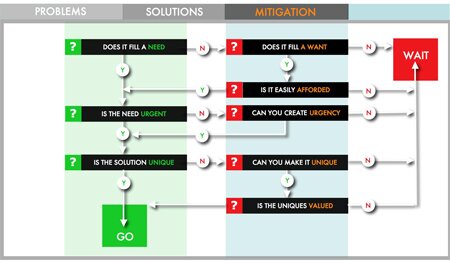
FIG. 1 Diagram adapted from David Pollard's 'Advice to Innovators: Know What Urgent Problem You're Uniquely Solving' (January 30 2006) - http://blogs.salon.com/0002007/2006/01/30.html
FUNNELS
The Innovation Problem Funnel encourages the Mitigation Flow of Innovation. While the traditional funnel has a generous input end (FIG.2) it transforms very quickly into a “mitigation tunnel” at the narrow output end. It is not generous to new opportunities or new disruptions from the contexts in which the innovation evolves.
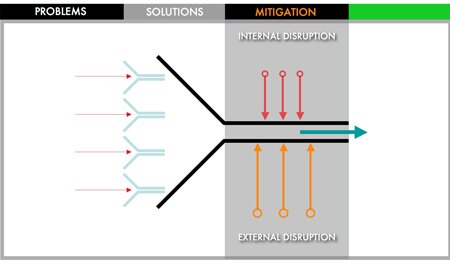
FIG. 2 The Innovation Problem Funnel
We propose the model of Pre-Competitive Innovation as a strategic tool - beyond competition. The “next big thing” is not tactical innovation, but a strategic one. Not a product, but a business.
WE SEE INNOVATION AS A PRE-COMPETITIVE NECESSITY.
Pre-Competitive Innovation starts with Innovation Questions rather than Innovation Problems.
A NEW MIND SET:
Pre-Competitive Innovation is a mind set necessary for the creation of beneficial services, products and experiences at the intersection of technology and latent behaviour. Pre-Competitive innovation merges the innovation question framework with the innovation problem framework.
- The Innovation Question Framework (FIG.3) provides answers to a multitude of questions such as “if this technology happens what would people want to do with it?” The Innovation Question Framework defines the new beneficial behaviours made possible by a disruption and models the organizational capability required to deliver them. This is a Pre-Competitive Opportunity.
- The Innovation Problem Framework responds to the question “How do we account ourselves in the face of this new disruption” .The Innovation Problem Framework defines the response capability in face of disruptions. This is a Competitive Response.
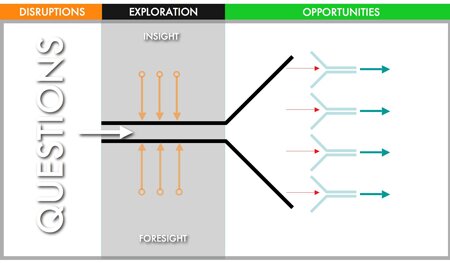
FIG.3 The strategic foresight Framework for Pre-Competitive Innovation
THE STRATEGIC FORESIGHT FRAMEWORK FOR PRE-COMPETITIVE INNOVATION
combines the opportunity generating capability of the Innovation Question together with the response capability of the Innovation Problem. The Innovation Question Framework creates lightweight structures that direct the flow of new ideas through standard innovation processes, meta-ideas that manage the nature of value and benefit in complement to the tactics of Innovation Problems.
WHAT ARE THE METRICS?
In the Innovation Problem Framework the metrics are determined by the metrics of the problem space – the mechanisms of the creative problem to be solved and its context. These are the metrics of what we expect and what we know – they are the metrics of past experiences and proven methods. We measure how to manage the variables that emerge.
An Innovation Question framework calls for a retooling of the archetypical living strategies – the tools, methods and positions - of the past. For this, both a culture and a framework that nourishes imaginative inquiry pursuits are required.
The key opportunity for innovation does not reside in finding answers to the problems of the moment, but in pursuing and framing the questions of our time.
“Judge others by their questions rather than by their answers.” Voltaire
TBC.
April 3, 2007
With thanks to Jussi Lystimaki for the “next big thing”; and to Tuula Antola for the passion that will - no doubt - make this dialogue continue.